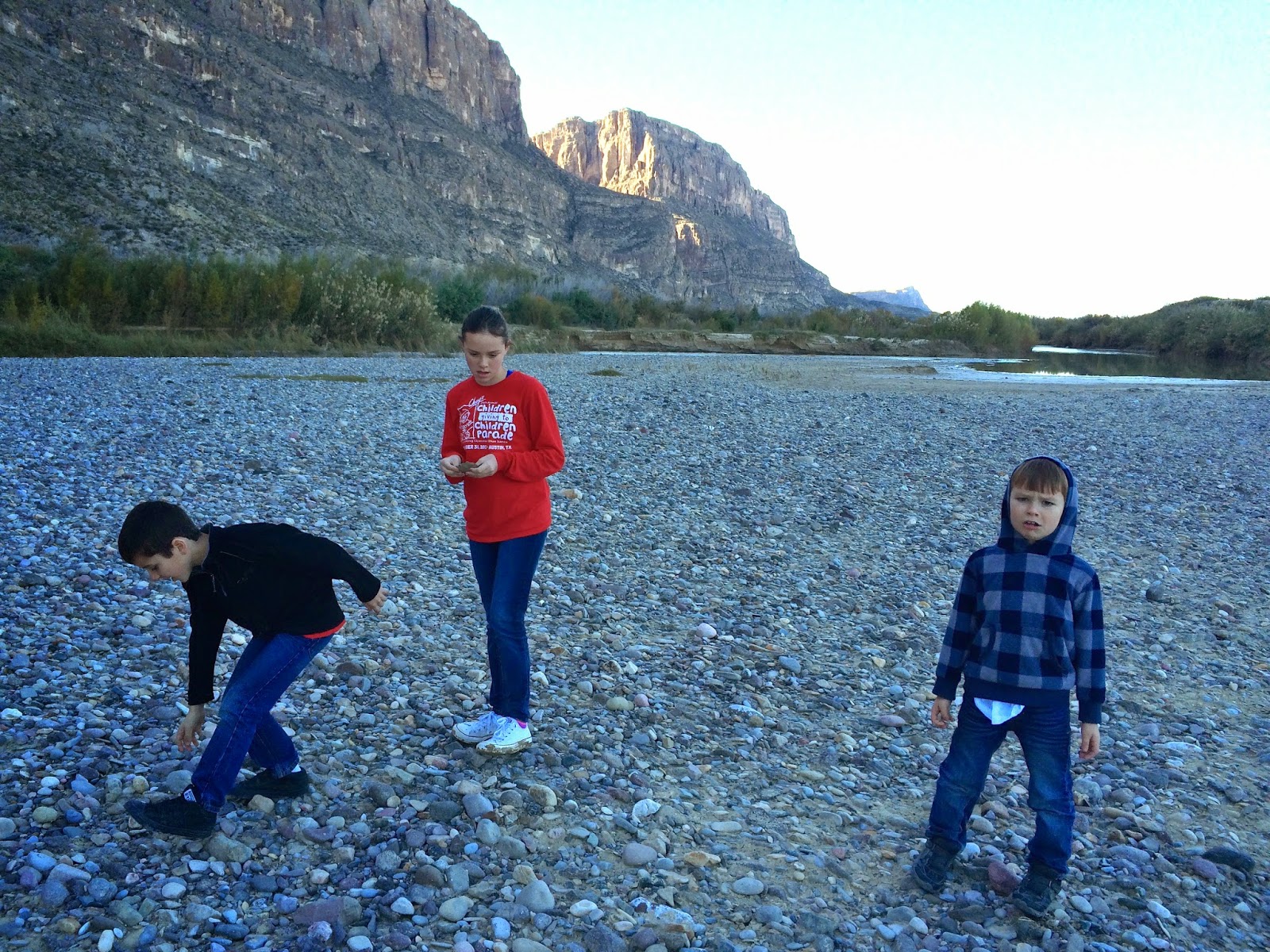
After some glorious skiing in Lake Tahoe, the carful of kids have to drive back to Texas. It's a long haul so we need some cool spots along the way to keep it interesting.
The boys have been begging me to take them to Death Valley National Park, just for the name; it's a boy thing. With temperatures above 100 F for months on end, I couldn't make myself stop during the summer. I leave Texas to escape the heat, I'm not heading to places that are hotter!
To my surprise, Death Valley is a glorious winter destination with mild temperatures and plenty of sunshine. Even better, there's resort in the middle of the desert, complete with palm trees and swimming pools.
Death Valley National Park
Death Valley is the largest national park outside of Alaska, with over 3 million acres. Within it's boundaries is the lowest point in North America. That's not the only record. The hottest temperature ever recorded happened here in 1913 (134 F/56.7 C). Not Africa, like I assumed but Southern California.
 |
| At 282 feet below sea level, the Badwater Basin hike is a kid-pleaser. |
The History of Death Valley
The Tisbisha Shoshone have called Death Valley home for thousands of years. Though it was a group of lost pioneers stranded during the winter of 1849-1850 that named it. First came the gold miners in the 1850s and then borax mining in the 1880s. After the mining moved on, a resort was built to help support the infrastructure.
 |
| There's a Death Valley Junior Ranger badge along with a special Night Explorer patch. |
Surrounded by the Amargosa and Panamint mountain ranges, Death Valley is 140 miles long. The peaks surrounding Death Valley can reach 11,000 feet. This makes for some epic desert landscape photos.
Death Valley was first protected as a national monument in 1933. In 1994, it became a national park. It's part of the UNESCO's Mojave and Colorado Deserts Biosphere Reserve.
Death Valley's Harsh Conditions
It's hot in the summer. Sure people will tell you it's a dry heat but so is my oven. During the summer, the park rangers almost shutter the park and suspend programming just to keep visitors safe.
 |
| The boys take turns doing their best impression of dead in Death Valley. |
Why is it so hot? The surrounding mountains are tall and the two mountain ranges are close together. They essentially trap the heat. The valley floor doesn't help with its lack of vegetation; it just reflects the heat.
Where to Stay in Death Valley
For the carful of kids' adventure in Death Valley, I found a room at the family-friendly The Ranch at Furnace Creek. It's centrally located and Badwater Road is minutes away where you will find several must-dos.
 |
| The standard room with two queen beds features a TV, mini-refrigerator, in-room coffee, iron, hair dryer along with complimentary WIFI. |
The Ranch at Furnace Creek has a kid-pleasing western theme with plenty to keep the kids occupied. Among the buildings I find an outdoor, spring-fed pool, a tennis court, a playground and a sports court. The pool is older but it's well-maintained and boasts a constant temperature of 82 F.
 |
| There are two restaurants at the entrance of the Furnace Creek Resort that are family-friendly, including a kids' menu. |
For the adults, there's a golf course within walking distance. The Borax Museum is open daily (Free, 9 a.m. to 9 p.m.) if you want to learn more about Death Valley's mining history. For kids into science, Furnace Creek Resort has a solar facility with a viewing platform.
The Ranch at Furnace Creek also has cabins for rent, a RV park and campground. For those wanting a little more glamour, there's the Inn at Furnace Creek. It's a four-diamond 66-room resort that was built in 1927; it's a great choice for adults.
There's another developed area closer to the western entrance of Death Valley. The Stovepipe Wells area features a hotel with a pool and camping.
What to do with the kids
The carful of kids do a Junior Ranger badge at every national park we visit. It takes a couple of hours and requires the kids to attend a ranger program and recycle trash. A drive down Badwater Road is a kid-pleaser and Artists Drive is another one not to miss.
The Mesquite Flat Sand Dunes are a family favorite. The overlooks at Zabriskie Point and Dantes View are great stops for families too. There are several ghost towns around Death Valley, like Rhyolite outside Beatty, Nevada.
Getting to Death Valley
Death Valley is in a desolate part of California and Las Vegas is the closest city, 125 miles east. Interstate 15 at Baker, California, is 84 miles south of Death Valley Junction.
 |
| Winter is a great time to hike in Death Valley. |
California Highway 190 transects Death Valley from Death Valley Junction on the east side to Panamint Springs on the west side. The majority of the services in the park are located in the Stovepipe Wells Village or the Furnace Creek Resort area.
There's an airstrip in the Furnace Creek area in Death Valley. No public transportation is available into the national park.
Getting around Death Valley
Death Valley National Park is open 365-days a year, 24-hours a day. The admission is $20 per vehicle for a 7-day pass or you can purchase an annual America the Beautiful Pass for $80 to gain entry into the majority of national parks and monuments.
 |
| Don't feed the animals for your safety and theirs. |
There are close to 1,000 miles of roads in Death Valley National Park though the majority of them are unpaved, four-wheel drive roads unsuitable for most vehicles. Please read the map carefully.
Note for 2016 Travel
Scotty’s Castle is closed until further notice according to the
NPS. A flash flood destroyed the road and infrastructure servicing
Scotty’s Castle; the building was unharmed.
Know before you go:
- Make reservations for lodging and tours as soon as possible. Lodging reservations can be made 13 months in advance.
- Don't enter mines shafts or tunnels.
- Carry extra water year-round. Water is only available in the developed areas of the park.
- Don't rely on technology for directions. Get a map at the visitors center.
- The summer season is May through September. The park suspends popular programs like ranger programs and horse trips.
- Don't hike at the lower elevations during the summer.
- Don't leave kids or pets in vehicles in the summer. Temperatures can reach 160 F in the car.